 كاميرات مضادة للانفجار

كاميرا الفرن: High Temperature Furnace Monitoring System for Safe and Efficient Industrial Operations
مقدمة
In modern industrial processes, maintaining real-time visibility inside high-temperature furnaces is essential for ensuring product quality, والكفاءة التشغيلية, and workplace safety. Industries such as steel manufacturing, cement production, glass processing, power generation, and petrochemical refining all rely on furnaces operating at extremely high temperatures.
However, direct observation of furnace conditions is often impossible due to intense heat, flames, dust, and hazardous gases. As a result, many facilities are turning to advanced Oven Camera Systems و High Temperature Furnace Monitoring Systems لتحقيق المراقبة البصرية المستمرة دون تعريض الأفراد للبيئات الخطرة.
في هذا المقال, سنستعرض كيفية عمل أنظمة كاميرات الأفران, فوائدها الرئيسية, ولماذا أصبحت أداة لا غنى عنها في العمليات الصناعية الحديثة.
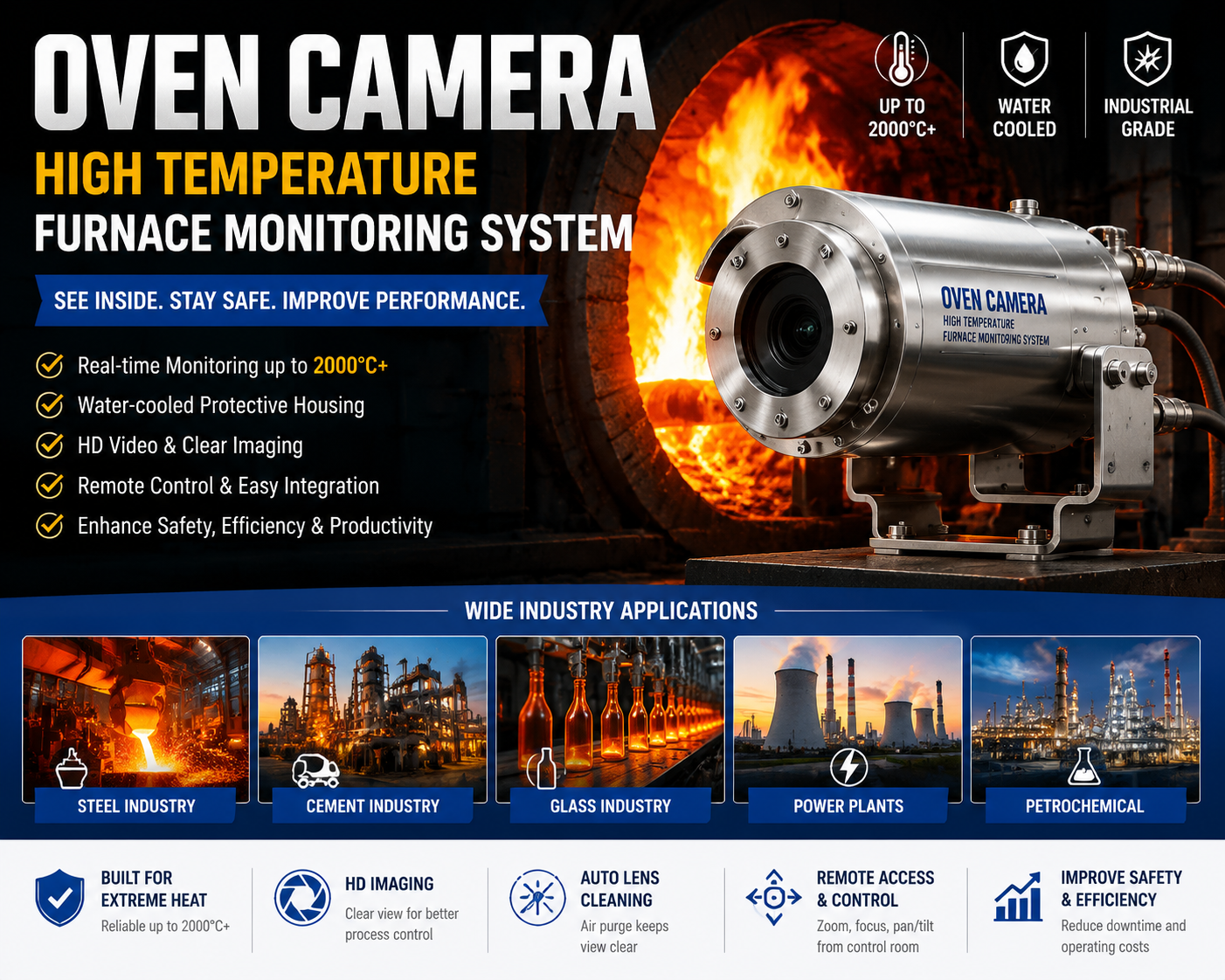
نظام مراقبة الفرن عالي الحرارة
نظام كاميرا الفرن
ما هو نظام كاميرا الفرن?
هو كاميرا الفرن كاميرا صناعية مصممة خصيصًا لتوفير المراقبة البصرية في الوقت الفعلي داخل الأفران ذات درجات الحرارة العالية, الأفران, المراجل, المحارق, وحجرات الاحتراق.
على عكس الكاميرات التقليدية, تتميز كاميرات الأفران ذات الحرارة العالية بـ:
- أغطية حماية مبردة بالماء أو الهواء
- عدسات مقاومة للحرارة
- مجسات تصوير من الطراز الصناعي
- أنظمة تنظيف العدسة التلقائية
- قدرات المراقبة عن بعد
وبالتالي, يمكن لهذه الأنظمة العمل بشكل موثوق في البيئات التي قد تتجاوز فيها درجات الحرارة 1500°C (2732°F).
كاميرات أخرى للمراقبة الصناعية المختلفة
لماذا يُعتبر مراقبة الفرن مهمة?
الأفران الصناعية هي أصول إنتاجية حاسمة. لذلك, أي انقطاع يمكن أن يؤدي إلى خسائر إنتاجية كبيرة ومخاطر سلامة.
تحسين كفاءة العملية
تمكن مراقبة الفرن في الوقت الفعلي المشغلين من ملاحظة:
- نماذج اللهب
- تدفق المواد
- ظروف الاحتراق
- أداء الموقد
As a result, يمكن إجراء التعديلات على العملية على الفور لتحسين كفاءة الإنتاج.
تعزيز سلامة مكان العمل
تقليديًا, كان على المشغلين فحص الأفران يدويًا من خلال فتحات المراقبة.
However, التعرض للحرارة الشديدة والغازات الخطرة يخلق مخاوف كبيرة تتعلق بالسلامة.
باستخدام نظام كاميرا الفرن, يمكن للمشغلين مراقبة الظروف الداخلية عن بُعد من غرفة التحكم, مما يقلل بشكل كبير من تعرض الأفراد للبيئات الخطرة.
تقليل التوقف غير المخطط له
علاوة على ذلك, المراقبة المستمرة تسمح للمشغلين بتحديد الشذوذ قبل أن تتطور إلى أعطال كبيرة.
أمثلة تشمل:
- أعطال الموقد
- أضرار الطوب الحراري
- انسداد المواد
- تراكم الخبث المفرط
وبالتالي, يمكن جدولة الصيانة بشكل استباقي بدلاً من رد الفعل.
كيف تعمل كاميرا فرن بدرجة حرارة عالية?
على الرغم من أن بيئات الأفران شديدة القسوة, تم تصميم أنظمة كاميرات الأفران الحديثة لتحمل هذه الظروف من خلال تقنيات التبريد والحماية المتقدمة.
خطوة 1: حماية الحرارة
أولاً, يتم وضع الكاميرا داخل غلاف من الفولاذ المقاوم للصدأ المتين.
عادةً, يتميز الغلاف بـ:
- التبريد بالماء
- تنقية الهواء
- العزل الحراري
يضمن هذا أن تظل درجة حرارة الكاميرا الداخلية ضمن حدود التشغيل الآمنة.
خطوة 2: المشاهدة المستمرة
التالي, توفر نافذة بصرية مقاومة للحرارة رؤية واضحة داخل الفرن.
في الوقت نفسه, تساعد أنظمة تطهير الهواء على منع تراكم الغبار والسخام على العدسة.
As a result, تظل جودة الصورة مستقرة حتى أثناء التشغيل المستمر.
خطوة 3: نقل الفيديو في الوقت الفعلي
يتم إرسال الصور الملتقطة إلى:
- غرف التحكم
- أنظمة SCADA
- أنظمة التحكم الموزعة (DCS)
- منصات المراقبة الصناعية
يمكن للمشغلين بذلك مراقبة حالة الفرن 24/7 دون إيقاف الإنتاج.
الميزات الرئيسية لأنظمة مراقبة الأفران الحديثة
مقاومة درجات الحرارة العالية
واحدة من أهم الخصائص هي القدرة على العمل في بيئات الحرارة الشديدة.
اعتمادًا على التطبيق, يمكن لأنظمة كاميرات الأفران تحمل درجات حرارة تتراوح من:
- 1000°م
- 1200°م
- 1500°م
- 2000°م+
تطبيقات أنظمة كاميرات الأفران
صناعة الصلب
تستخدم مصانع الصلب كاميرات الفرن لمراقبة:
- الأفران العالية
- Electric arc furnaces
- Reheating furnaces
- Continuous casting operations
Cement Industry
يقوم مصنعو الأسمنت بنشر كاميرات الأفران من أجل:
- مراقبة لهب الأفران الدوارة
- التحكم في إنتاج الكلنكر
- تحسين الاحتراق
تصنيع الزجاج
تستخدم مصانع الزجاج كاميرات الأفران لمراقبة:
- عمليات صهر الزجاج
- توزيع حرارة الفرن
- حالة تدفق المواد
محطات الطاقة
عادةً ما يتم تركيب كاميرات الغلايات في:
- محطات الطاقة التي تعمل بالفحم
- محطات الطاقة الحيوية
- منشآت تحويل النفايات إلى طاقة
تساعد هذه الأنظمة في تحسين كفاءة الاحتراق مع تقليل الانبعاثات.
صناعة البتروكيماويات
تستخدم المصافي ومنشآت البتروكيماويات أنظمة مراقبة الأفران لتحسين رؤية العمليات وضمان التشغيل الآمن.
تشمل التطبيقات:
- أفران التكسير
- سخانات العمليات
- وحدات الإصلاح
فوائد تركيب نظام مراقبة الأفران
جودة منتج أفضل
تسمح التغذية البصرية الفورية للمشغلين بالحفاظ على ظروف العملية بشكل متسق.
As a result, تحسن جودة المنتج بشكل كبير.
زيادة السلامة التشغيلية
المراقبة عن بُعد تقلل من تعرض العمال للبيئات الخطرة.
والأهم من ذلك, هذا يقلل من مخاطر الحوادث في مكان العمل.
خفض تكاليف الصيانة
من خلال تحديد المشاكل مبكرًا, يمكن للمرافق تجنب الإصلاحات الطارئة المكلفة.
وبالتالي, يمكن تحسين ميزانيات الصيانة.
تحسين كفاءة الطاقة
المراقبة الدقيقة للاحتراق تساعد على تقليل استهلاك الوقود وتحسين أداء الفرن.
لذلك, تنخفض تكاليف التشغيل بينما يتم دعم أهداف الاستدامة.
اختيار نظام كاميرا الفرن المناسب
قبل اختيار حل لمراقبة الفرن, اعتبر العوامل التالية:
درجة حرارة التشغيل
تأكد من أن النظام مصمم لتحمل أقصى درجة حرارة للفرن لديك.
طريقة التبريد
تشمل الخيارات:
- كاميرات الفرن المبردة بالماء
- كاميرات الفرن المبردة بالهواء
مسافة الرؤية
Select appropriate optics based on furnace size and monitoring requirements.
Environmental Conditions
Evaluate exposure to:
- Dust
- Ash
- Corrosive gases
- Vibration
A modern Oven Camera High Temperature Furnace Monitoring System provides industrial operators with the visibility needed to improve safety, efficiency, and process control in extreme environments.
Whether installed in steel plants, cement kilns, glass furnaces, power boilers, or petrochemical facilities, these systems deliver continuous real-time monitoring while reducing downtime and maintenance costs.
Ultimately, investing in a reliable furnace camera solution helps manufacturers achieve safer operations, better product quality, and higher overall productivity.
الأسئلة الشائعة
What temperature can a furnace camera withstand?
Depending on the design, industrial furnace cameras can monitor environments exceeding 2000°C through specialized cooling systems.
What industries use oven camera systems?
Steel, cement, glass, power generation, petrochemical, waste-to-energy, and mining industries commonly use furnace monitoring systems.
Can furnace cameras be integrated with SCADA systems?
نعم. Most modern furnace camera systems support integration with SCADA, DCS, and PLC platforms.
What is the difference between a furnace camera and a thermal camera?
A furnace camera provides direct visual monitoring inside the furnace, while a thermal camera measures surface temperatures using infrared technology.
How does the camera survive extreme temperatures?
Protective housings, water cooling, air purging, and heat-resistant materials keep the camera operating safely in high-temperature environments.
وي تشات
امسح رمز الاستجابة السريعة بواسطة وي تشات