 Fornecedor de Câmeras à Prova de Explosão

Câmara do Forno: Sistema de Monitorização de Fornos de Alta Temperatura para Operações Industriais Seguras e Eficientes
Introdução
Nos processos industriais modernos, manter visibilidade em tempo real dentro dos fornos de alta temperatura é essencial para garantir a qualidade do produto, eficiência operacional, e segurança no local de trabalho. Indústrias como a fabricação de aço, produção de cimento, processamento de vidro, geração de energia, e refinação petroquímica dependem todas de fornos que operam a temperaturas extremamente altas.
No entanto, a observação direta das condições do forno é muitas vezes impossível devido ao calor intenso, chamas, poeira, e gases perigosos. Como resultado, muitas instalações estão a recorrer a sistemas avançados Sistemas de Câmara de Forno e Sistemas de Monitorização de Fornos de Alta Temperatura para conseguir monitorização visual contínua sem expor o pessoal a ambientes perigosos.
Neste artigo, vamos explorar como funcionam os sistemas de câmaras para fornos, os seus benefícios principais, e por que se tornaram uma ferramenta indispensável nas operações industriais modernas.
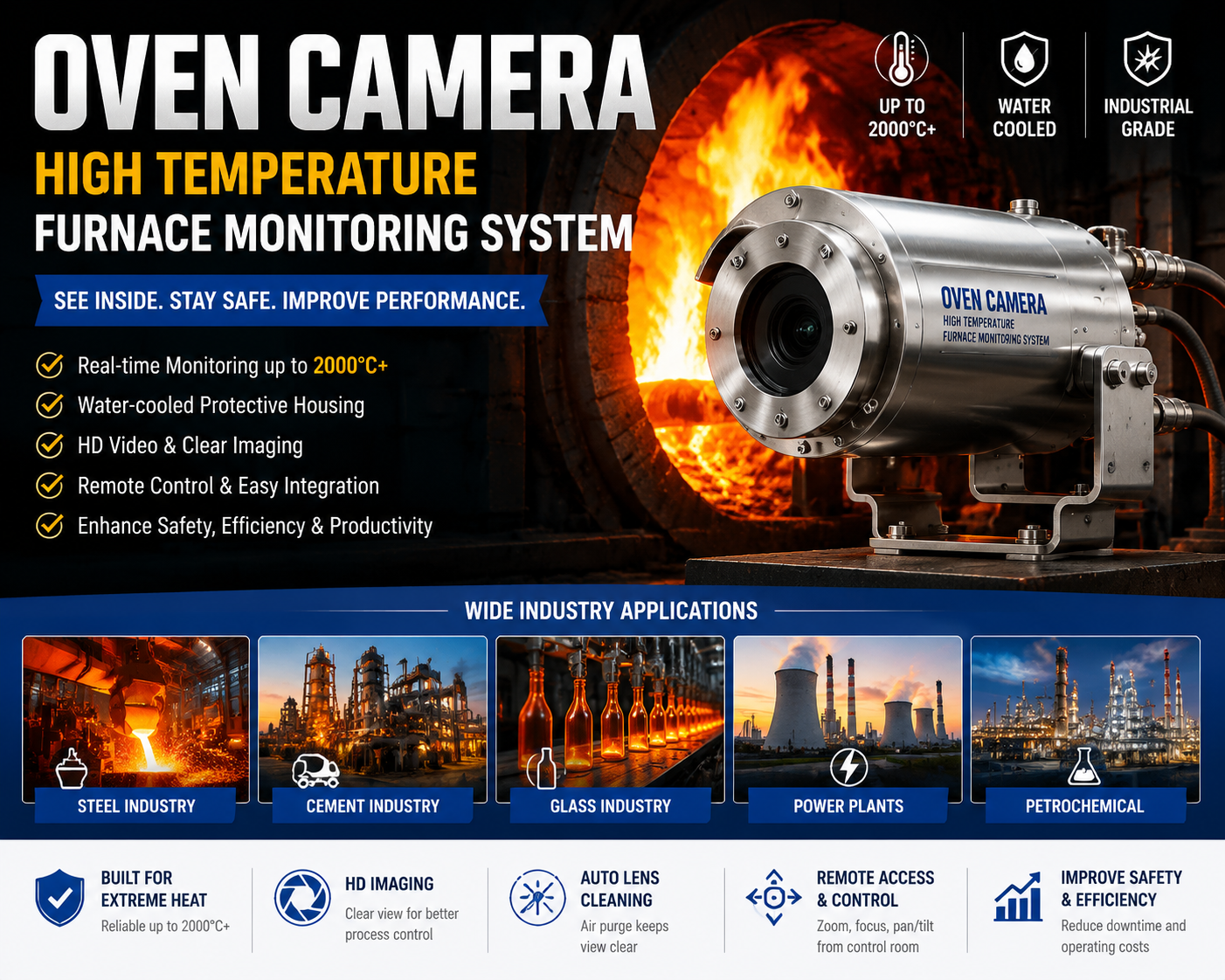
Sistema de Monitorização de Forno de Alta Temperatura
Sistema de Câmara para Forno
O Que É um Sistema de Câmara para Forno?
Uma Câmara do Forno é uma câmara industrial especialmente projetada para fornecer monitorização visual em tempo real dentro de fornos de alta temperatura, fornos de cerâmica, caldeiras, incineradores, e câmaras de combustão.
Ao contrário das câmaras convencionais, as câmaras para fornos de alta temperatura estão equipadas com:
- Caixas de proteção resfriadas a água ou a ar
- Ópticas resistentes ao calor
- Sensores de imagem de nível industrial
- Sistemas automáticos de limpeza de lentes
- Capacidades de monitorização remota
Consequentemente, estes sistemas podem operar de forma fiável em ambientes onde as temperaturas podem ultrapassar os 1500°C (2732°F).
Outras Câmaras para diferentes monitorizações industriais
Por que é importante o monitoramento de fornos?
Os fornos industriais são ativos de produção críticos. Portanto, qualquer interrupção pode resultar em perdas de produção significativas e riscos para a segurança.
Melhorar a Eficiência do Processo
O monitoramento em tempo real dos fornos permite aos operadores observar:
- Padrões da chama
- Fluxo de material
- Condições de combustão
- Desempenho do queimador
Como resultado, ajustes no processo podem ser feitos imediatamente para otimizar a eficiência da produção.
Melhorar a Segurança no Local de Trabalho
Tradicionalmente, os operadores precisavam inspecionar os fornos manualmente através de portas de observação.
No entanto, a exposição a calor extremo e gases perigosos cria preocupações significativas de segurança.
Ao utilizar um sistema de câmeras de forno, os operadores podem monitorizar as condições internas remotamente a partir de uma sala de controlo, reduzindo significativamente a exposição do pessoal a ambientes perigosos.
Reduzir Tempo de Inatividade Não Planeado
Além disso, A monitorização contínua permite aos operadores identificar anomalias antes de evoluírem para falhas graves.
Exemplos incluem:
- Falhas no queimador
- Danos no refratário
- Bloqueios de material
- Acúmulo excessivo de escória
Consequentemente, A manutenção pode ser planeada de forma proativa em vez de reactiva.
Como Funciona uma Câmara de Forno de Alta Temperatura?
Embora os ambientes de fornos sejam extremamente agressivos, Os sistemas de câmaras modernas para fornos são concebidos para suportar estas condições através de tecnologias avançadas de arrefecimento e proteção.
Passo 1: Proteção contra calor
Primeiro, A câmara está alojada dentro de uma caixa robusta de aço inoxidável.
Normalmente, A caixa apresenta:
- Arrefecimento a água
- Purgatório de ar
- Isolamento térmico
Isto assegura que a temperatura interna da câmara se mantenha dentro de limites seguros de funcionamento.
Passo 2: Visualização contínua
Próximo, uma janela ótica resistente ao calor fornece uma visão clara do forno.
Entretanto, os sistemas de purga de ar ajudam a prevenir a acumulação de pó e fuligem na lente.
Como resultado, a qualidade da imagem mantém-se estável mesmo durante a operação contínua.
Passo 3: Transmissão de Vídeo em Tempo Real
As imagens capturadas são transmitidas para:
- Salas de controlo
- Sistemas SCADA
- Sistemas de Controlo Distribuído (DCS)
- Plataformas de monitorização industrial
Os operadores podem, portanto, monitorizar as condições do forno 24/7 sem interromper a produção.
Principais Características dos Sistemas Modernos de Monitorização de Fornos
Alta Resistência a Temperatura
Uma das características mais importantes é a capacidade de operar em ambientes de calor extremo.
Dependendo da aplicação, os sistemas de câmaras de forno podem suportar temperaturas entre:
- 1000°C
- 1200°C
- 1500°C
- 2000°C+
Aplicações dos Sistemas de Câmaras de Forno
Indústria do Aço
As fábricas de aço utilizam câmaras de forno para monitorizar:
- Altifornos
- Forno de arco elétrico
- Forno de reaquecimento
- Operações de lingotamento contínuo
Indústria do cimento
Fabricantes de cimento utilizam câmaras de forno para:
- Monitorização da chama do forno rotativo
- Controlo da produção de clínquer
- Otimização da combustão
Fabrico de vidro
As fábricas de vidro utilizam câmaras de forno para observar:
- Processos de fusão do vidro
- Distribuição de temperatura do forno
- Condições de fluxo de material
Centrais elétricas
Câmaras de caldeira são comumente instaladas em:
- Centrais a carvão
- Centrais de biomassa
- Instalações de valorização de resíduos
Estes sistemas ajudam a otimizar a eficiência da combustão ao mesmo tempo que reduzem as emissões.
Indústria petroquímica
Refinarias e instalações petroquímicas utilizam sistemas de monitorização de fornos para melhorar a visibilidade do processo e garantir a operação segura.
As aplicações incluem:
- Fornos de craqueamento
- Aquecedores de processo
- Unidades de reformação
Benefícios da instalação de um sistema de monitorização de forno
Melhor qualidade do produto
O feedback visual em tempo real permite aos operadores manter condições de processo consistentes.
Como resultado, a qualidade do produto melhora significativamente.
Aumento da Segurança Operacional
Monitorização remota minimiza a exposição dos trabalhadores a ambientes perigosos.
Mais importante ainda, isto reduz o risco de acidentes de trabalho.
Redução dos Custos de Manutenção
Ao identificar problemas precocemente, as instalações podem evitar reparações de emergência dispendiosas.
Consequentemente, orçamentos de manutenção podem ser otimizados.
Melhoria da Eficiência Energética
Monitorização precisa da combustão ajuda a reduzir o consumo de combustível e a melhorar o desempenho da caldeira.
Portanto, os custos operacionais são reduzidos enquanto os objetivos de sustentabilidade são apoiados.
Escolher o Sistema de Câmaras de Forno Certo
Antes de escolher uma solução de monitorização de forno, considerar os seguintes fatores:
Temperatura de Funcionamento
Garantir que o sistema está desenhado para a temperatura máxima da sua caldeira.
Método de Arrefecimento
Opções incluem:
- Câmaras de forno arrefecidas a água
- Câmaras de forno arrefecidas a ar
Distância de visualização
Selecione a ótica adequada com base no tamanho do forno e nos requisitos de monitorização.
Condições Ambientais
Avalie a exposição a:
- Poeira
- Cinza
- Gases corrosivos
- Vibração
Um moderno Sistema de Monitorização de Forno de Alta Temperatura com Câmera para Forno fornece aos operadores industriais a visibilidade necessária para melhorar a segurança, eficiência, e controlo de processos em ambientes extremos.
Quer instalado em siderurgias, fornos de cimento, fornos de vidro, caldeiras de energia, ou instalações petroquímicas, estes sistemas oferecem monitorização contínua em tempo real, reduzindo o tempo de paragem e os custos de manutenção.
Em última análise, investir numa solução de câmera de forno confiável ajuda os fabricantes a alcançar operações mais seguras, melhor qualidade de produto, e maior produtividade geral.
Perguntas Frequentes
Que temperatura pode uma câmera de forno suportar?
Dependendo do design, câmaras de fornos industriais podem monitorizar ambientes superiores a 2000°C através de sistemas de arrefecimento especializados.
Que indústrias utilizam sistemas de câmaras em fornos?
Aço, cimento, vidro, geração de energia, petroquímica, valorização energética de resíduos, e as indústrias mineiras utilizam comumente sistemas de monitorização de fornos.
Podem as câmaras de fornos ser integradas com sistemas SCADA?
Sim. A maioria dos sistemas modernos de câmaras de fornos suporta integração com SCADA, DCS, e plataformas PLC.
Qual é a diferença entre uma câmara de forno e uma câmara térmica?
Uma câmara de forno fornece monitorização visual direta dentro do forno, enquanto uma câmara térmica mede temperaturas superficiais utilizando tecnologia de infravermelhos.
Como a câmara sobrevive a temperaturas extremas?
Carcaças de proteção, arrefecimento com água, purga de ar, e materiais resistentes ao calor mantêm a câmara a funcionar de forma segura em ambientes de alta temperatura.
WeChat
Digitalize o Código QR com o WeChat