

Explosion Proof Cameras for Petrochemical Industry: Ensuring Safety and Reliability in Hazardous Environments
Introduction
In the petrochemical industry, ensuring the safety and security of assets, personnel, and production processes is paramount. Facilities such as refineries, uzine chimice, terminale GNL, and offshore platforms operate in highly hazardous environments where flammable gases, volatile chemicals, and high-temperature processes are common.
To mitigate risks, Explosion Proof Cameras have become a critical component of modern industrial surveillance systems. These cameras are designed to operate reliably in hazardous locations, providing continuous monitoring while ensuring safety compliance.
In this article, we will explore how explosion-proof cameras work, their applications in the petrochemical industry, and why investing in them is essential for operational efficiency and workplace safety.
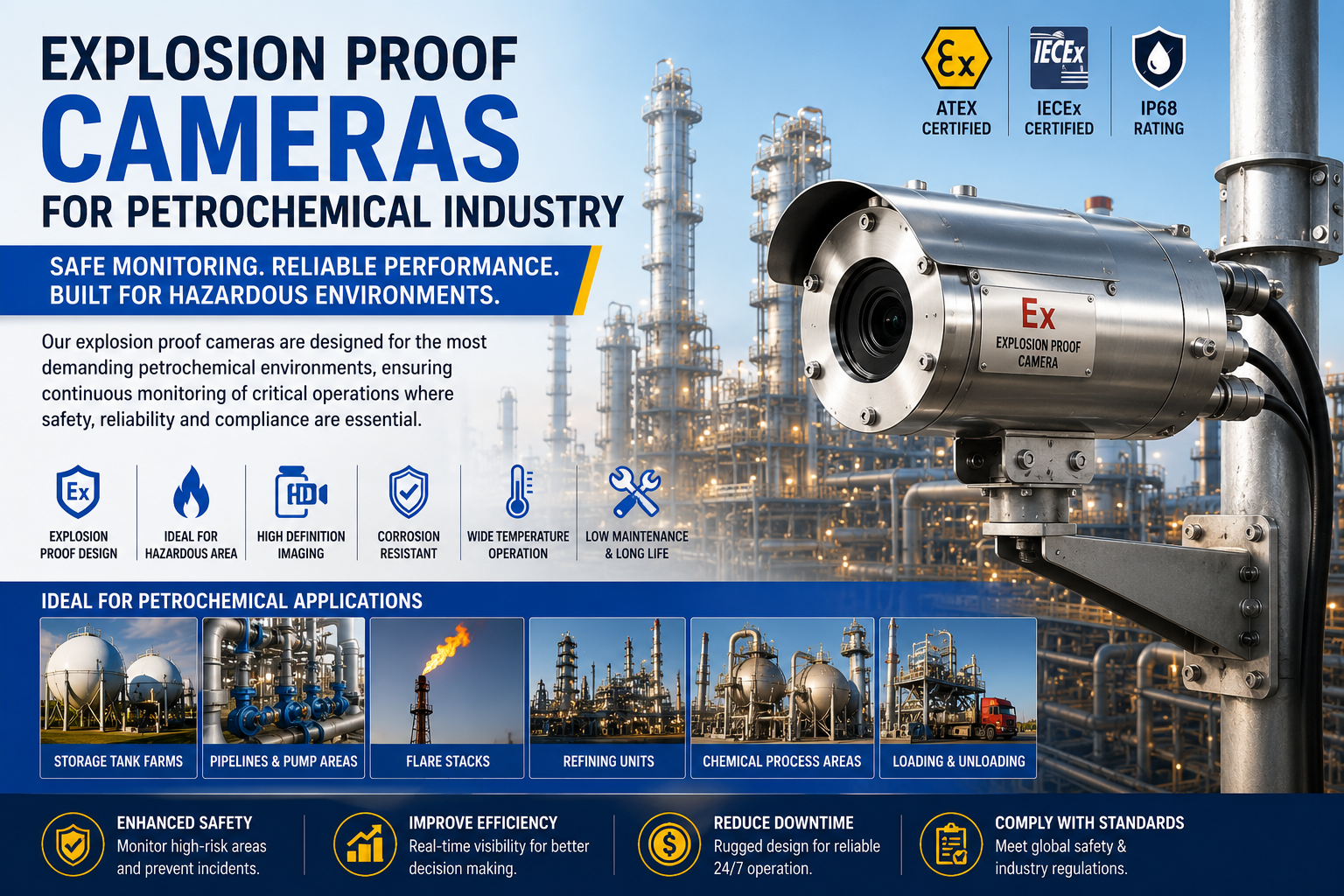
What Are Explosion Proof Cameras?
Explosion Proof Cameras are industrial surveillance cameras specifically designed to prevent ignition of explosive gases, vapors, or dust in hazardous areas. They feature:
- Rugged, corrosion-resistant housings
- ATEX, IECEx, and CNEX certifications
- PTZ (Pan-Tilt-Zoom) capabilities for wide-area monitoring
- High-definition imaging for clear process visibility
- Optional thermal or infrared imaging for low-light environments
These cameras allow operators to monitor high-risk areas remotely without endangering personnel, providing a critical layer of safety and operational control.
Why Explosion Proof Cameras Are Vital in the Petrochemical Industry
1. Safety Compliance
Petrochemical facilities must comply with strict international safety standards. Using explosion-proof cameras ensures compliance with:
- ATEX directives
- IECEx safety standards
- Local hazardous area regulations
This minimizes the risk of fire or explosion caused by electrical equipment.
2. Remote Monitoring of Hazardous Areas
Explosion-proof cameras allow operators to monitor areas such as:
- Flare stacks
- Chemical storage tanks
- Gas processing units
- Loading and unloading terminals
As a result, operators can detect leaks, abnormal operations, or unauthorized access in real-time, improving safety response.
3. Operational Efficiency
Continuous visual monitoring helps:
- Detect process irregularities early
- Reduce unscheduled downtime
- Optimize maintenance scheduling
- Improve workflow efficiency
Key Features of Explosion Proof Cameras for Petrochemical Plants
High Temperature and Corrosion Resistance
Cameras are designed to withstand extreme heat, chemical vapors, and corrosive environments. Materials such as stainless steel and protective coatings extend operational life.
PTZ and Zoom Capabilities
Pan-Tilt-Zoom functionality allows operators to cover wide areas with a single camera. This reduces the number of cameras needed, lowering installation and maintenance costs.
Infrared and Thermal Imaging
Some models provide infrared or thermal imaging to detect:
- Gas leaks
- Temperature anomalies
- Fire hotspots
This enables continuous monitoring in low-light or smoke-filled environments.
Applications in the Petrochemical Industry
Rafinării
Cameras monitor:
- Crude distillation units
- Hydrocracking and reforming units
- Flare systems
- Storage tanks
Terminale LNG
Used to oversee:
- Cryogenic storage tanks
- Loading/unloading stations
- Transfer pipelines
Platforme offshore
Protect cameras against:
- Saltwater corrosion
- Harsh wind and weather
- Explosion-prone gas emissions
Uzine Chimice
Monitor:
- Hazardous chemical reactions
- Storage areas
- Production lines
Benefits of Installing Explosion Proof Cameras
- Enhanced Safety: Protects workers by enabling remote monitoring of hazardous areas.
- Regulatory Compliance: Meets ATEX, IECEx, and local safety standards.
- Reduced Maintenance: Durable housings and self-cleaning features minimize maintenance.
- Improved Surveillance: High-resolution video and PTZ functionality provide detailed monitoring.
- Operational Continuity: Detect issues early and prevent costly shutdowns.
Choosing the Right Explosion Proof Camera
When selecting cameras for petrochemical environments, consider:
- Certification: Ensure ATEX, IECEx, or CNEX approval.
- Housing Material: Stainless steel or corrosion-resistant alloys.
- Operating Temperature Range: Select a camera rated for your facility’s maximum temperature.
- Lens Protection: Anti-corrosion and self-cleaning features for long-term clarity.
- Integration Capability: Compatible with existing industrial control systems.
Concluzie
Explosion-proof cameras are an indispensable tool for the petrochemical industry, enabling safe, reliable, and continuous monitoring in hazardous environments. By investing in high-quality explosion-proof surveillance systems, petrochemical facilities can enhance safety, ensure regulatory compliance, improve operational efficiency, and protect critical assets.
FAQ
Q1: What is an explosion proof camera?
A: It is a camera designed to prevent ignition in hazardous environments containing flammable gases, vapors, or dust.
Q2: Where are they used in petrochemical plants?
A: Common areas include refineries, chemical storage, terminale GNL, offshore platforms, and gas processing units.
Q3: Can explosion-proof cameras operate in extreme temperatures?
A: Yes, most industrial models withstand high temperatures and corrosive conditions while providing HD video.
Q4: Do these cameras support remote monitoring?
A: Yes, they integrate with NVR, and can remote control easily
Q5: Are PTZ cameras suitable for petrochemical applications?
A: Absolutely. PTZ cameras provide wide-area coverage and detailed zoom capabilities, reducing the number of cameras needed.
WeChat
Scan the QR Code with wechat